


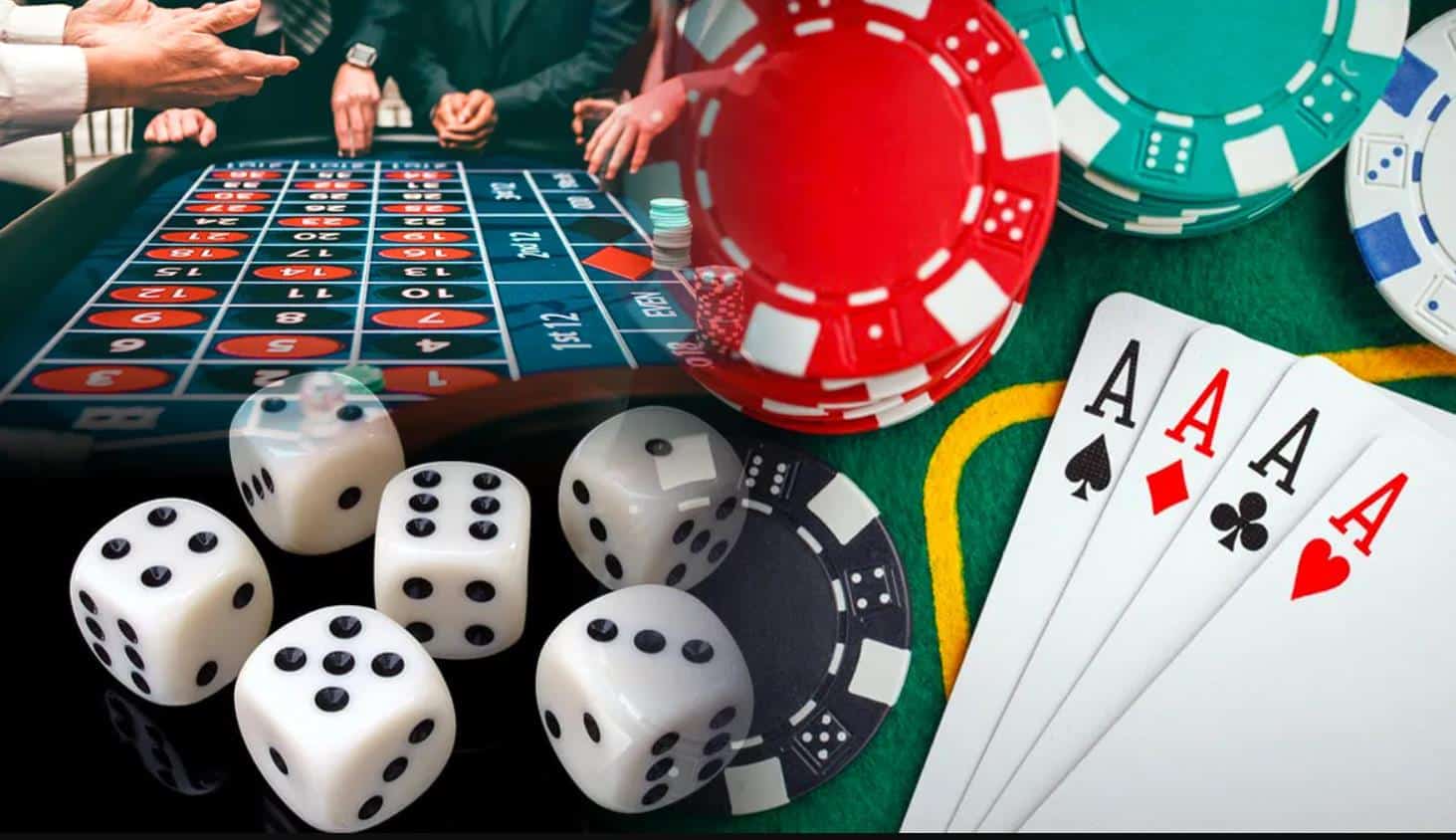
Stepping into an online casino wincleo for the initial time seems like entering a vast digital playground where every door hides a different kind of thrill. The vast array of blinking reels, spinning wheels, and animated card tables is exhilarating, but it also raises an instant query: where does a newcomer even start? The wisest choice is to avoid random clicking. Each game type has its own rhythm, risk profile, and payout potential. Selecting with knowledge from the get-go transforms a casual try into an absorbing strategic hobby. At a contemporary platform like Wincleo Casino, the lobby is structured to serve that range of options, but the power of selection remains solidly in your hands. This guide charts the landscape. It details the workings, the psychological strategy, and the actionable steps so you can move through the floor with certainty—and so your experience is characterized by fun, not confusion.
Table-based Games and the Tactical Mindset

While slots function in a realm of pure chance, table games bring a dimension where player decisions actively alter the outcome’s probability curve. Black Jack, roulette, baccarat, and casino poker variants form the strategic backbone of the lobby. Moving from slots to these games necessitates a shift from passive observation to active participation. Wincleo Casino’s table game selection presents these classics into a digital interface that often includes informative roadmaps and low-stakes thresholds perfect for beginners. The core allure here is agency. In a hand of blackjack, the choice of hitting a 12 against a dealer’s 2 versus standing is a deliberate branching path, not a blind guess. Learning that a dealer is bound by rigid mechanical rules (drawing to 16 and standing on all 17s) gives the analytical player a translucent view of the opposing algorithm’s skeleton.
Blackjack acts as the quintessential entry point for strategy-curious beginners as a widely published, mathematically verified basic strategy chart can be found. This color-coded grid, conveniently available online, dictates the optimal positional move for every possible player-hand versus dealer up-card combination. Using such a chart eliminates emotional hunches and swaps them with cold, proven logic, compressing the house edge to roughly 0.5% under standard rules. The attention a newcomer at Wincleo must pay is not to the esoteric concept of card counting, unnecessary in continuously shuffled digital formats, but to rule variations. Tables that pay 3:2 for a natural blackjack are clearly superior to those paying 6:5, and the presence of dealer standing on soft 17 versus hitting it subtly changes the equilibrium. Spotting these rule subtleties in the game lobby information panel turns a casual player into a sharp evaluator before a chip is even placed.
The roulette wheel and baccarat represent opposing ends of the strategy spectrum: one a visually complex wheel of pure randomness, the other a streamlined binary duel. European Roulette, with its single green zero pocket, is mathematically the definitive version; any wheel containing a double zero slot doubles the house edge’s bite on most bet types. A beginner’s initial foray into roulette should thus be a geographical one, scanning for the European label. Baccarat, conversely, demands almost nothing of the player strategically, as the drawing rules for Player and Banker hands are automated and arcane. Yet the analytical path for a new player here involves noting the commission structures: a Banker bet typically carries a 5% vigorish on wins, a structural tax that balances its slight statistical dominance. Checking out Wincleo’s live dealer or RNG-backed tables becomes a lesson in contrasting pure luck (roulette’s scattered chips) with minimalist strategic choice (baccarat’s three core bet boxes).
The Live Gaming Area and the Personal Touch
Live dealer games close the distance between the solitary digital RNG setting and the tangible, wood-and-felt atmosphere of a brick-and-mortar venue. High-definition streams broadcast professional croupiers spinning real wheels or peeling actual cards from shoes, and a chat interface facilitates player-to-dealer interaction. This genre, prominently featured in the Wincleo live lobby, transforms game selection from a strictly mathematical decision into a social and atmospheric one. The key upside for a beginner is transparency: observing a real ball land in a pocket removes any subconscious doubt about RNG integrity, replacing code with tangible physics. The rhythm, however, alters significantly. A digital round of blackjack played in 15 seconds extends into a leisurely, social minute, compelling the player to adopt patience as a component of the bankroll management strategy.
The particular variants across the live arena are designed for various temperaments. Speed roulette shortens the betting window to a frantic pulse, while immersive roulette offers cinematic close-up slow-motion replays of the landing zone. For card game enthusiasts, live blackjack tables typically have seven seats, creating a shared tableau where a newcomer can passively observe how experienced players manage their 14s against a dealer’s 10 before committing to their own hand. A unique etiquette emerges here: the aggressive player who hits disruptively doesn’t mathematically affect a cautious player’s odds, but the psychological friction can tilt a session’s mood. Wincleo’s variety likely includes tables designated specifically for newcomers, where lower bet minimums and friendlier dealer banter lessen the intimidation factor. Selecting a live table ought to be a two-layer scan: first, determine the rule set; second, judge the dealer’s energy and the table’s occupancy via the thumbnail preview before taking a virtual seat.
The game-show hybrid live titles, spinning wheels of fortune, ladder multipliers, and bouncing ball drop machines, require careful analytical examination from a beginner. These are not traditional table games but crafted entertainment machines with very specific, often complex payout matrices. While visually magnetic, their casino edges can mask themselves within chaotic, layered multipliers. The enthusiastic beginner drawn to the bright lights of a Dream Catcher-style wheel should hesitate and examine the segmentation of the paytable: the frequent segments with high hit frequency carry tiny multipliers, while the infrequent segments carrying huge payout numbers show up with a occurrence tuned to preserve the mathematical edge. Treating these hybrid titles as spectacle purchases instead of grinding tools is the most prudent analytical approach. At Wincleo, they function as a group, festive interlude between rounds of focused strategic play.
Understanding the Casino Advantage and Volatility Mechanics
Prior to you make a solitary wager, you have to grasp two concepts that influence the whole experience: the house edge and risk. The edge is the statistical advantage the game maintains over you, expressed as a percentage of each bet the house expects to keep over the extended period. It is not a immediate fee. Consider it as a numerical gravity that ensures the platform stable. A high-quality European Roulette wheel has a house edge of about 2.7%, while a certain slot might vary from 2% to 10% according to its programming. That number reminds you: games are by no means meant to be overcome by force in one session. They are built for enjoyment, with unpredictable outcomes.
Variance, often termed variance, outlines the risk profile and winning pattern of a particular title. A low-volatility game behaves like a gentle flow, delivering common but usually lower wins that steadily sustain a budget and prolong the playing time. Traditional three-reel slots and certain video poker variants often fall into this gentle category. High-volatility games are the contrary: a fierce blast. Long dry spells, then a unexpected multiplier avalanche. Jackpot progressive slots stand at this extreme, where a one spin can potentially change a financial landscape. Your psychological makeup needs to match these mechanics. If you yearn for continuous action and feedback, a high-variance slot will seem like torture. A adrenaline junkie, on the contrary, might brush off low-risk tables as tedious. Sites like Wincleo Casino provide filters and game info screens where sharp beginners can check the volatility rating before committing any funds.
The interplay between edge and volatility is the point at which game intelligence emerges. A high-variance game with a moderate return-to-player percentage creates a remarkably efficient bankroll vacuum. A low-margin, low-variance table game delivers the smoothest learning curve. Newcomers often are attracted to bright, loud slots without realizing they have wandered into a high-volatility zone, resulting in rapid depletion and unfounded frustration. Acknowledging that a 96% RTP slot mathematically holds 4% of all wagers over millions of spins aids recalibrate short-term expectations. View these statistics not as a gloomy warning but as a chart of the terrain. That way you bring the right gear. A beginner who realizes that a blackjack hand played with perfect basic strategy can whittle the house edge below 1% walks into the lobby with a entirely different, more empowered posture.
Examining Bonus Formats and Wagering Requirements
A welcome promotion or reload bonus in an online casino is never a gift in the pure financial meaning; it is a structured arrangement with attached stipulations that must be analytically understood before approval. The headline figures, 100% match up to a certain amount plus spins, function as the initial attention capture, but the operational fact lives in the terms and conditions link appended below them. The most critical measure is the wagering requirement multiplier. This number dictates how many times the combined deposit and bonus sum must be wagered through the games before any withdrawal of winnings becomes possible. A 35x multiplier on a bonus and deposit bundle that totals $100 creates a necessary wagering amount of $3,500. This is not an unrealistic obstacle but a marathon parameter, and the beginner’s approach to any Wincleo Casino promotional page is to scan for this exact multiplication factor initially, before considering the potential reward.
The weighting of contributions across game categories adds further complexity to the decoding of these promotional offers. Slots almost entirely contribute 100% toward the wagering countdown, making them the best choice for clearing requirements. Table games, however, often see their contribution cut to 20%, 10%, or even 0%, because their lower house edge and strategic elements reduce the mathematical risk for the house during the bonus cycle. A beginner who makes a deposit, claims a bonus, and immediately goes to a blackjack table to clear the terms might find their progress tracker scarcely progressing, leading to confusion and frustration. The analytical path is to view the bonus as a slot-play amplifier, saving table game exploration for post-bonus or independent cash sessions. Certain payment method exclusions also lurk in the fine print; depositing via specific e-wallets might bar a player from the welcome package entirely, a mechanical restriction that should be confirmed in the promotional conditions before funding a Wincleo account.
- Confirm the exact wagering multiplier (e.g., 35x, 40x) before activating any offer.
- Check the maximum bet limit allowed while a bonus is active; exceeding it can void the bonus and any derived winnings.
- Find the time window for completion; a 7-day deadline creates a drastically different pressure than a 30-day window.
- Scan the contribution table: slots typically contribute 100%, while roulette and blackjack may contribute only 5% to 20%.
- Look for a maximum win cap from bonus funds, which places a ceiling on how much can ultimately be withdrawn.
- Confirm that the preferred deposit method qualifies for the promotional trigger.
Banking Efficiency and Financial Strategy
The movement of money into and out of a player account forms a administrative process that is equally important to understand as the actual gameplay. A casino’s financial interface typically displays a range of methods: credit and debit cards, e-wallets, prepaid vouchers, bank wire transfers, and, progressively, various cryptocurrency gateways. For a beginner visiting Wincleo Casino’s cashier, the first analytical distinction is not brand recognition, but the bidirectional capability of a method. Some deposit avenues do not support withdrawals, creating a frustrating asymmetry where funds go in rapidly but must find an different withdrawal path later. Identifying an all-in-one method, one that both handles and disburses to the same account, simplifies the entire management process and prevents the common beginner trap of locked-up balances.
Transaction speed and approval limits influence the psychological journey of a withdrawal request. E-wallets and crypto rails usually offer the most fast processing times, often processing within hours once an account is thoroughly approved, whereas traditional bank transfers can extend into a window of three to five business days. The KYC (Know Your Customer) verification process is the standard checkpoint; Wincleo, like any regulated provider, requires the provision of identity documents, proof of address, and occasionally payment method ownership before a first withdrawal clears. This is not a paperwork barrier designed to hold up funds, but a compliance measure against fraud and money laundering. The organized player prepares a clear photo of a government ID, a recent utility bill or bank statement with corresponding location, and a screenshot of the e-wallet profile showing name consistency before even initiating the withdrawal. This preventive method reduces the verification approval time considerably, converting what many perceive as a stressful interrogation into a quick, smooth approval loop.
Navigating the Slot Spectrum from Traditional Slots to Megaways
Slots are the pulsating heart of any online casino lobby. They make up the overwhelming majority of games on offer, and their variety within is staggering. At the entry point sits the traditional three-reel slot, a direct offshoot of the mechanical Liberty Bell, reliant on single paylines and simple fruit or bar symbols. These games stand out in their stark simplicity. They remove complex narrative layers and offer nothing but the pure loop of push and result. Wincleo Casino’s collection anchors itself with these digital antiques not just for sentimental value, but because they serve as an ideal training ground. A beginner can see the exact relationship between a single line bet, the spin cost, and the payout table without a tsunami of flashing mini-games clouding the financial mechanics.
Moving up the complexity chain, video slots introduce five-reel architectures and multiple paylines, often ranging from 20 to a fixed 243 ways to win. Here, the mathematical structure becomes richer, including wild substitutions that splice together incomplete clusters, scatter symbols that trigger free spin chambers, and cascading reels where winning symbols disappear to let new ones fall downward. These titles strike the sweet spot for most modern players because they inject narrative and visual spectacle without losing statistical clarity. A beginner examining a popular Egyptian or mythology-themed video slot at Wincleo should focus on the paytable button first, scrutinizing not just the jackpot figure but the exact conditions that trigger the bonus round. The flashing “collect” meters are fundamentally short-term dopamine triggers placed over a random number generator algorithm. Treat them with mechanistic curiosity rather than blind faith, and the experience changes from passive gambling to active analysis.
The Megaways engine and its alternatives signal the largest shift in the slot world. The number of symbols per reel randomizes on every single spin, generating tens of thousands to hundreds of thousands of potential winning paths. This dynamic reel modifier eliminates the static grid, rendering each outcome feel like an unscripted blast. Yet that very dynamism creates extreme peaks and troughs in volatility. If you test a Megaways slot, keep in mind: the cascade feature, while fun to watch, makes it harder to trace how a single bet turned into a specific win line. step by step guide Studying the base game hit frequency is essential. If a Megaways slot triggers cascades frequently but gives only incremental fractional multipliers of the stake, it functions functionally as a high-entertainment, slow-bleed machine. When choosing a slot from Wincleo’s immersive catalog, the beginner’s checklist should not be “what looks prettiest,” but “what volatility profile and bonus trigger frequency matches my patience level today.”
Developing a Personal Pick Matrix for Long Sessions
Moving beyond scattered trial-and-error clicks necessitates a newcomer to construct an mental decision matrix that connects mood, budget, and time horizon to fitting game clusters. This is the mental toolkit that differentiates the exhausted, unfocused gambler from the focused, selected player browsing the Wincleo Casino lobby. The first axis of this matrix is session length intent. A 15-minute micro-session on a mobile device during a commute demands a fundamentally different game profile than a relaxed two-hour desktop immersion. The micro-session excels on regular-payout, stable slots or perhaps a quick round of auto-roulette, where the density of events per minute occupies the short window. The extended session, on the other hand, opens the door to methodical strategy card play, live dealer tables where hands unfold at human speed, and exploratory dives into the details of a sophisticated Megaways slot bonus buy feature.
The subsequent axis concerns bankroll segmentation and bet sizing logic. A disciplined approach splits the session’s allocated funds into smaller, non-reloadable mental buckets, each allocated to a genre. A player might allocate 40% of a bankroll to a base-game consistent video slot with medium volatility, 40% to a low-stakes live blackjack table where basic strategy reduces the drain, and 20% set aside for a speculative, high-volatility jackpot slot where a single spin can act as a lottery ticket. This prevents the common syndrome of feeding an entire budget into a single, rapidly devouring Megaways game within minutes. Wincleo’s interface, which commonly allows a player to view bet sizes and adjust coin values, facilitates this segmentation. Betting 1% of the allocated sub-bankroll per spin on a slot, or 5% per hand on a blackjack table, generates mathematically sustainable exposure curves that favor patience over impulse.
The final analytical pillar is the purposeful documentation of personal performance trends, not for the false hope of predicting future outcomes, but to create an transparent audit trail of what game categories consistently delivered the desired entertainment. A novice can keep a basic note tracking the genre played, the session duration, and whether the experience matched the volatility expectation. Over ten sessions, patterns emerge: a player might realize they find live roulette visually mesmerizing but bankroll-eroding when betting extensively, whereas concentrated blackjack sessions feel mentally satisfying and last significantly longer. This stored intelligence integrates into the selection matrix, honing it from a rough guide into a tailored, reliable compass. The Wincleo lobby, with its broad categorization and preview features, becomes a responsive playground once this internal filter is engaged. The goal is not to chase a single massive win, but to engineer a consistently thrilling, analytically sound form of digital leisure where game choice is a skill mastered, not a button randomly pressed.